
Leisure in North Cyprus
Nature
The natural beauty of North Cyprus is evident from the moment you arrive, from the tip of its mountains to the sand on its beaches. It's not just Northern Cyprus tourists who appreciate this, though; Turkish Cypriots love their countryside and are more than happy to share it with you!
Having an average of only 51 people per square kilometre, Northern Cyprus holds the enviable reputation of being free of pollution, industry or high concentrations of population. With 387 Km of coastline, and pine, cypress and maquis bush covered hillsides, North Cyprus is a wildlife haven.
The sheer variety of the countryside in such a small country is one of the main attractions of a nature holiday on North Cyprus. Within a ninety minute drive, you can climb from secluded sandy coves right into the heart of wooded mountains, or out onto a rocky peninsula jutting into the ocean. This means the nature lover has plenty to see and do all year round.
Turtles
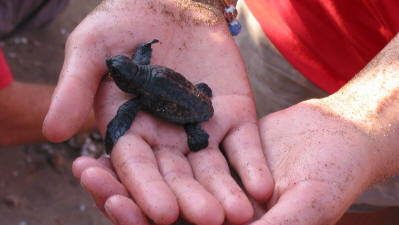 |
| A Turtle Hatchling at Alagadi Beach |
The beaches of North Cyprus are amongst the last in the Mediterranean to be selected by the turtles which lay their eggs during the months of July and August. Two Endangered species, the Loggerhead and the Green Turtle immigrate in hundreds every year. They dig holes as deep as one metre during the night and 7 to 8 weeks later little babies appear. North Cyprus can be considered the home for about 30% of the Green Turtles of the Mediterranean. Since 1992, the Marine Turtle Research Group has been recording the turtles' activity during the summer months. Nesting is normally from the end of June into August, with hatching some two months later.
The site most intensively studied is the famous Alagadi Beach about 12 miles east of Girne. You can witness these unique events, by joining the researchers at their base "The Goat Shed" at Alagadi just before sunset.
Bird Watching
It is possible to watch nearly 350 different species of bird in Cyprus. However, only 46 are native to Cyprus, including 7 that are found only on the island. 119 of the birds that can be observed are winter migrants, 90 of which migrate to Cyprus regularly every winter. Cyprus is on a North-South migration route. March to May is the period for northward migration, and August to October for the southward.
Wildflowers
The fields in North Cyprus are alive with wild flowers during the spring, when the land is carpeted with cyclamens, anemones, narcissi and wild tulips. By early summer, the citrus trees are in bloom, filling the air with their heady scent, followed by the red blossoms of the pomegranate trees. By autumn, Cyprus cyclamens and autumn crocuses bloom on the northern slopes of the mountains.
Orchids
Because of their rarity and beauty, orchids hold a fascination for all naturalists. There are over 30 species of wild Cyprus orchid, which inhabit a variety of spaces from shady tree roots to rocky crags. The best place to see bee orchids is at levkayasi forest station, where there is also a fascinating Herbarium,, where you can identify any mystery plants you've spotted.
Butterflies
As soon as the spring flowers bloom in North Cyprus, the butterflies emerge. As you walk through any area of flowers, clouds of these and other species butterflies will rise like flying confetti as you pass, a glorious sight.
Herbarium
North Cyprus has more to offer than its sun and sea, natural beauties and historic sites. One surprising attraction is the North Cyprus herbarium, which charms lovers of our wild flowers as well as providing a research centre for botanists. Most people can confidently name the more showy blooms in the countryside; shepherds and foresters know dozens more. But how many of those seventeen North Cyprus "endemics", found nowhere else in the world, would you recognize?
The herbarium was opened in 1989. Since then it has expanded to include examples of nearly all the 1250 native plants species. For the guidance of visitors it has special displays of flower photographs, specimens of all those seventeen "endemics" photographs of the oldest and biggest trees.
The herbarium is located in the Alevkayasi Forest Station on the Kyrenia mountain ridge.