
A Brief History of Cyprus
Independent Cyprus (1960 - 1974)
The Treaty of Zurich gave independence to Cyprus whilst protecting the rights of the Turkish Cypriot population. The guarantors of this treaty were Britain, Greece, and Turkey.
The president was to be from the Greek, and the vice-president from the Turkish community, each with the power of veto. In the government and the civil service, the communities were represented in the ratio of 70% to 30%, whilst in the police and army, the ratio was 60% to 40%. Failure to agree on the structure of the army resulted in Makarios, the first president of Cyprus, declaring that Cyprus would have no armed forces. This led to the formation of private armies, supplied clandestinely by Greece and Turkey.
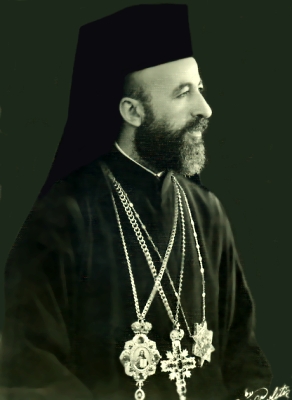 |
| Archbishop Makarios |
In legislative matters, separate majorities were required from the Greek and Turkish members of the Cyprus House of Representatives. The major towns had separate municipalities, and in the law courts, the accused were tried by members of their own community
This complicated system proved to be unworkable in practice, owing to inherent suspicions between the two communities. However, a straightforward democracy, or majority rule, was not applicable to Cyprus as it would have resulted in the Turkish community having no effective say in the government, and would have almost certainly have led to a declaration of enosis, or union with Greece.
In 1963 relations between the two communities, separated by language, culture and religion, had deteriorated. 13 articles of the Constitution were attempted to be changed in favour of Greek Cypriot community, also disarming Turkish Cypriot Police and establishing the National Greek Cypriot Guards. These measures were in clear contravention of the Treaty of Zurich. Civil war began, and the United Nations sent in troops in an attempt to restore peace, creating the Green Line, which effectively divided the communities.
Matters came to a head on Christmas Eve 1963, when armed Greeks attacked a suburb of Nicosia, killing or capturing those Turkish Cypriots inhabitants who were unable to escape. Armed conflict spread, with the Turkish Cypriots withdrawing into enclaves to defend themselves. In the Spring of 1964, some 20,000 mainland Greek troops entered the Island illegally.
A buffer zone was set up and manned by British troops in a largely unsuccessful attempt to stop the fighting. These were later replaced by United Nations troops in March 1964.
Makarios revealed his true colours when on January 1st 1964 he announced the abrogation of the treaties signed in London, intending to establish self determination for Cypriots, which, as the Greeks were in the majority, would almost certainly lead to a proclamation of enosis. Under pressure from Britain and Turkey, Makarios repealed his announcement.
In the spring of 1964, the "Acheson Plan", provided another opportunity to resolve the long-standing dispute. Cyprus would be ceded to Greece. In return, the Greek island of Kastellorizon, just 3 miles off the southern coast of Turkey would be transferred to Turkey. Turkey would also have a sovereign base area on Cyprus, covering most of the Karpaz. This would be owned by Turkey in perpetuity, much as the British SBAs are in the south of the island. Turkish Cypriots, would also be allowed to have several parts of the island, totally administered by themselves.
Although this plan was supported by Greece and Turkey, Makarios vetoed it, as he felt this gave too much to Turkey and the Turkish Cypriots.
An amended plan leased a much smaller area of the Karpaz to Turkey for 50 years only. In addition, there would be no self-administered areas for the Turkish Cypriots. This plan was rejected by Turkey, and so, once again, the chance of a settlement was lost.
In August 1964, well armed Greek forces attempted to crush the Turks at Erenkoy (Kokkina) on the north coast, in order to interrupt the flow of munitions from the Turkish mainland. They would undoubtedly have succeeded had not the Turkish air force intervened. This act added a new dimension to the conflict. Fear of Turkish intervention sobered the Greeks somewhat, and they settled down to systematic economic blockade of the Turkish enclaves. This situation amounted to partition, especially as the Turks were no longer able to participate in the government or civil service.
Further armed conflict in 1967 provoked Turkey to threaten military intervention, but with the takeover by the colonels in Greece, and the economic boom in Cyprus, the concept of enosis grew less attractive.